|
Uday
Chatterjee profiles Sunil Bharti Mittal, winner of the
Ernst & Young 'entrepreneur of the year' award
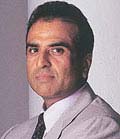
Sunil
Bharti Mittal, chairman of the Bharti group of industries
is a man who thinks big and talks straight. The door
of the conference room of his Dehli office is inscribed
in capital letters with the words 'sultanate 1.' That's
thinking big for you.
Recently,
a television channel asked him how the result of the
American presidential election would affect the outsourcing
business. He shot back: "It will not. The whole
thing has been blown out of proportion." That's
talking straight.
In
1976, when he was just 18, he ventured into the world
of business. He set up a bicycle parts unit in his home
town in Ludhiana with a modest investment of Rs20,000.
He then dabbled in knitwear and utensils before moving
his base to Delhi and Mumbai.
Here,
he dabbled in the import and distribution of goods,
mainly portable generators. So thorough was his grasp
of the business that he is said to have committed nearly
all the convoluted regulatory sections of the voluminous
Export-Import Handbook to memory. In 1983-84,
he set up his first company, Bharti Healthcare, manufacturing
capsules.
This
versatile personality's romance with the telecom world
happened purely by accident. In 1983, imports of several
products were banned, including portable generators,
which Mittal used to import. So he tied up with Siemens
to manufacture push-button telephones for the German
company.
In
1992, the bids were floated to award cellular licences
to the private sector for the Delhi metropolitan area
but the criteria stipulated that bidders were
required to have prior experience in offering telecom
services.
Mittal
commissioned a market survey, which revealed that the
market for cellular phones was extremely limited
the size revealed by the survey shoed just, 5,000 takers.
Mittal threw away the report and decided to jump in
the race regardless.
He
clinched a deal with the French telecom group, Vivendi,
after a three-hour session with its CEO. However, with
the deadline for the licence approaching, Vivendi backed
out saying they would join hands with the larger and
better-known Modi group, instead. Mittal, mustered all
his negotiation skills and cajoled the French to stay
the course with him. Vivendi agreed.
Mittal's
track record shows a string of firsts, which he is immensely
proud of the first push button telephone handset
in India, the first answering machine, the first fax
machine and the first cordless phone.
Today,
the Bharti group has acquired 20 per cent of the telecom
market and is the largest player in the private sector
and aspires to become a billion-dollar company in a
couple of years.
India's
largest private sector telecom company, Mittal's Bharti
Tele-Ventures will invest Rs3,000 crore in the current
fiscal to expand the company's network infrastructure.
"We
invest around Rs 3,000 crore investment a year,"
Mittal explains. The overall investment of the group
till date is Rs 13,500 crore "We are doubling base
stations to 10,000 by the end of the current fiscal
in largely new places and adding more capacity in the
large existing towns," he adds. Last month, Mittal's
cellular services venture, Airtel, extended its services
to the strife-tornstateof Jammu & Kashmir with base
stations located inJammu and elsewhere in the state.
Earlier
in March this year, IBM signed a 10-year deal estimated
at $750 million (based on the percentage of revenues
generated by the Indian company) to take over Bharti's
information-technology infrastructure and applications.
The agreement also includes joint-development and marketing
of IT and telecommunications products and services in
India, with Bharti as a preferred supplier of telecom
services to IBM India.
"The
agreement demonstrates our strategic intent to create
a globally admired telecommunication company,"
says Mittal and adds, "With predictable IT spending,
improved cash flow and optimised use of technology resources,
the agreement with IBM will enhance Bharti Tele-Ventures'
shareholder value."
Having
established his presence in the telecom sector, Mittal
is focussing his attention to other sectors. Along with
Singapore's Changi Airports, he has bid for the modernisation
of the Delhi and Mumbai airports. He is also making
a foray into the agro-processing industry and hopes
to "put the fresh produce from Indian fields onto
the tables of the western world."
The
agro firm is in the process of acquiring land and hiring
people. Mittal believes that if the execution is right,
the agro-processing venture will be bigger than telecom.
'India has great weather, zillions of acres of arable
land and you do not even need an English accent,' is
the reason he offers.
His
two brothers have assisted Mittal and as the businesses
grew, the group became a board-managed company. Today,
a team of 10 or 12 senior people takes key business
decisions. At 44, Mittal wants to be involved hands-on
in his business for another seven years after which
he'd like to play a larger role in society. Though his
father was in public life and a member of parliament,
Mittal is disinclined to enter politics. He wishes to
work in areas that lead to the empowerment of people
as he considers this the most essential.
A
family man, Mittal lives in Delhi with his wife, daughter
and two sons.
He wishes he could find more time to spend with the
family. "This is the problem with first generation
entrepreneurs," he sighs.
|