Indo-US strategic dialogue: Five pillars of inconsequence
02 Jun 2010
Last year, in July, Hillary Clinton spelled out the nature of the strategic dialogue the two nations would embark upon as being based upon five pillars, such as areas of strategic importance, agriculture, healthcare, science and technology and education.
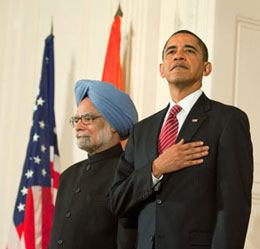 The sheer banality of the formulation made everybody yawn out loud and forget the 'strategic agenda' even as the lady was through mentioning it.
Certainly, nobody felt enthused enough to question the charming lady as to what should constitute 'normal' dialogue, if matters such as agriculture, healthcare, science and technology and education were elevated to the 'strategic' level.
After all agriculture, healthcare science and technology and education are normal bread and butter stuff that all governments talk to each other about on a routine basis. One would assume there's more to government-to-government interaction than mere validation of traveller visas.
It would now appear that even Washington realises that the sham of the so-called Indo-US 'strategic partnership' is being carried out in too slipshod a manner.
In a 29 May report from Washington, a PTI correspondent quoted assistant secretary of state for south and central Asia, Robert Blake, as saying, ''The main purpose of the next week's Indo-US strategic dialogue here is to think big and think strategically and not to focus much on deliverables.''
"There will be deliverables; I don't want to talk about the deliverables now. But we are really not focused that much on deliverables.