Iron-bearing Minerals in Sediments naturally reduce contaminant levels
24 Apr 2014
Led by researchers from Pacific Northwest National Laboratory (PNNL), scientists found that iron-bearing minerals sediments at a former nuclear reprocessing site transform technetium, an environmental contaminant of concern. The team demonstrated that the mineral's ferrous iron reacts in a solution containing an oxidized, soluble form of technetium--pertechnetate--decreasing the contaminant's levels and making it insoluble.
 | |
| This research, which appeared in Geochimica et Cosmochimica Acta, is important for assessing the ability and length of time required for natural processes to reduce the risk of groundwater contamination. |
According to the researchers' calculations, if all of the technecium-99 at the Hanford Site, a Manhattan Project site situated in Washington State, came into contact with all of the available ferrous iron, this natural process could remove the entire groundwater inventory of the isotope-which poses a major contamination risk-over a period of a few months.
Wastes associated with decades of nuclear reprocessing at the Hanford Site have been stored in ponds and underground tanks, and contaminants such as technetium have leaked from these storage mediums into the underlying sediments and groundwater.
This latest research is important for assessing the ability -- and length of time required--for natural processes to reduce the risk of groundwater contamination. The study also suggests that remediation resources and efforts at the Hanford Site could focus on locations where iron-bearing minerals are not present.
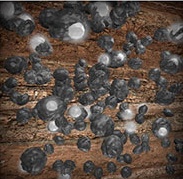
Researchers recovered sediments from several Hanford Site locations, characterised the iron-bearing minerals, and assessed the ability of the minerals to react with pertechnetate.
The team used scanning electron microscopy to characterise particle size and shape, micro-x-ray diffraction to characterise mineral structure, x-ray photoelectron spectroscopy to determine the surface composition of these minerals, and electron probe microanalysis to determine the composition of the bulk sediment. This research was done using resources at EMSL, a DOE national scientific user facility located on PNNL's main campus in Richland, Washington.
They found that magnetic minerals made up about one per cent of the total weight of the sediment, and magnetite represented about 90 per cent of the total magnetic mineral content.
Ferrous iron was located at the surface of the mineral--magnetite--and thus was accessible for reactions with contaminants in the environment. The team's findings suggest that during these reactions, ferrous iron transfers electrons to pertechnetate at the mineral surface, producing the reduced, less soluble form of technetium.
Scientists at PNNL are continuing to investigate geochemical reactions of interest to resolve defense and energy issue.