labels: Prem Shankar Jha
A strange omission indeed news
09 September 2008

The vociferous debate on the nuclear deal has ignored the fact that nuclear security lies not in bigger or more lethal bombs but the development of missile technology, which India can develop only if the ban on purchase of dual-use technology is relaxed, if not lifted entirely, writes Prem Shankar Jha

Dr Manmohan Singh's long drawn out battle to end India's nuclear isolation is almost over. All that remains is the passage of the 123 agreement by the US  Congress.

Contrary to a belief fostered by the opposition, and swallowed uncritically by the media, this is not going to be a cakewalk.
For the Left's long drawn out filibuster has left the US Congress with  no time to go through all the procedures mandated by it  for the consideration of  new bills. As a result, both houses of Congress will have to adopt 'fast track' procedures to push it through before the Bush administration demits charge in February. As of now, it is by no means certain that they will be able to do so.

Against this background, the government's decision not to place any orders for nuclear power plants till the US completes its enabling  legislation at home is not only gracious but wise.

Not only does it allow American firms to put pressure upon the two houses to take the extraordinary measures that are now needed, but it reinforces the  main argument that the Bush administration has been using all along to push the deal through, namely that India is a responsible nuclear power.

Responsibility is not a cloak that countries, any more than individuals, can don or shrug off  at will. It is an inherent trait of  character. By agreeing  to wait India has not only acknowledged its debt to the US, but also demonstrated its innate desire to play fair. It will therefore go some way towards reassuring the waverers in the two houses, who still harbour doubts about the wisdom of making such a giant, country-specific exception to the non-proliferation regime.

Now that the struggle is almost over, it is time to assess what India stands to gain, and also what it could, conceivably lose from entering the nuclear club on the terms finally hammered out in Vienna. 

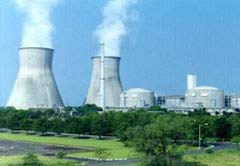
The immediate gain is that it opens the way for foreign investment in around 30,000 MW of  nuclear power plants. Coming on top of the coal-based ultra mega power plants that the government has already sanctioned, these can end the nation's crippling power shortage in as little as five years.

Critics have dismissed the prime minister's advocacy of the deal by asserting that India has more than enough coal to meet its foreseeable needs. They have also claimed that nuclear power is up to 10 times as expensive as coal-based power. Both arguments are wildly wrong.

 India's coal is poor in quality and its reserves are anything but inexhaustible. For to maintain an eight per cent growth rate the country will have to add 200,000 MW of generating capacity in the next decade, another 400,000 MW in the decade that follows, and another 800,000 MW in the decade after that (2028-38). At the rate of coal consumption that we will achieve in 2038  our coal reserves are likely to  run out in a decade.

 Coming to their second argument, the actual investment cost of nuclear plants is likely to be of the order of  Rs8 crore per megawatt. This  is more expensive  than coal only so long as we do not factor in the large, and rising, cost to society of coal-based plants - the production foregone on   thousands of hectares of land that will be buried under the fly ash generated by the boilers, and the economic cost of more frequent floods, cyclones  and droughts (not to mention the looming threat of abrupt climate change and the onset of a mini ice age), that could occur within the next half century.

While there is no downside to the deal, the upside is that it will electrify a sagging economy and could easily trigger the next industrial boom in the country.

Only a quarter of the Rs240,000 crores of investment  will have to be made  abroad on imported  nuclear reactors. Thus the  deal will immediately  inject Rs180,000 crore of orders for steel, cement , machinery, cabling and instrumentation into the economy  at a time when almost two years of sky-high interest rates have left the capital goods industries woefully short of orders.

If India has everything to gain and nothing to lose from the deal, why has such a large part of the intelligentsia done its  level best to sabotage it? 

One  reason  is that from the very beginning the debate has been  hijacked by lawyers and specialists in international relations. It has therefore revolved exclusively around two issues, the legal rights that India is likely to compromise, and the dangers that could inhere in surrendering the right to test nuclear weapons in the future.

Two crucial issues have therefore been  missing from the debate: how significant are the legal rights being compromised, and how likely is India to need nuclear weapons of greater power and portability than the ones it has already developed. All the strictures that have been entered by the NSG members, whether in their individual statements or the changes to the draft of the waiver, will come into play only if India conducts more nuclear tests.

But if India's reason for having nuclear weapons is not to engage in a nuclear war but deter any other country from using the threat of nuclear weapons to blackmail it,  then it has no need to conduct any more tests. All it needs to do is keep improving the range and accuracy of its missiles. Should it then feel seriously threatened it will only have to let its potential adversaries know that it has armed some of them and that they are pointing its way.

The truth is that the path to nuclear security lies not through bigger or more lethal bombs but through the acquisition or development of missile technology. India can do this only if the ban on purchase of dual use technology is relaxed, if not lifted entirely. But  strangely enough this one phrase was never uttered in the long and tortured debate that the country has been forced, needlessly, to go through.


 search domain-b
  go
 
A strange omission indeed