Honda researchers perfect nano technology for new class of electronics
03 Oct 2009
A team led by Honda Research Institute USA along with researchers at Purdue University and the University of Louisville has developed microscopic carbon nanotubes that are 100,000 times thinner than a human hair and have the potential to transport electricity faster and over greater distances with minimal loss of energy.
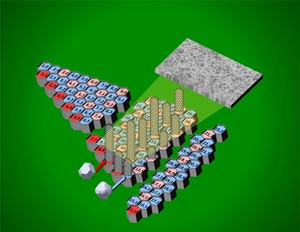 The findings open new possibilities for miniaturisation and energy efficiency, including much more powerful and compact computers, electrodes for supercapacitors, electrical cables, batteries, solar cells, fuel cells, artificial muscles, composite material for automobiles and planes, energy storage materials and electronics for hybrid vehicles, the researchers said in report published in the latest edition of the `Science' magazine.
Microscopic carbon nanotubes are grown on the surface of metal nanoparticles, taking the cylindrical form of rolled honeycomb sheets with carbon atoms in their tips. When these tiny carbon nanotubes exhibit metallic conductivity they possess extraordinary strength compared to steel, higher electrical properties than copper, are as efficient in conducting heat as a diamond and are as light as cotton, the report said.
"Our goal is not only the creation of new and better technologies and products, but to fulfill Honda's commitment to environment sustainability," said Hideaki Tsuru, project director from Honda Research Institute USA.
Past research efforts to control the structural formation of carbon nanotubes with metallic conductivity through conventional methodology had resulted in a success rate of approximately 25-50 per cent. Honda, which has worked in the field of carbon nanotube synthesis for almost a decade, has achieved a success rate of 91 per cent metallic conductivity for grown carbon nanotubes, the report noted.
"This is the first report that shows we can control fairly systematically whether carbon nanotubes achieve a metallic state. Further research is in progress with the ultimate goal to take complete control over grown nanotube configurations to support their real world application," said Avetik Harutyunyan, principal scientist from the Honda Research Institute USA, and the leader of the project.